Composers You Should Know: Unsuk Chin
by Oumar Sagna & Quentin Derac

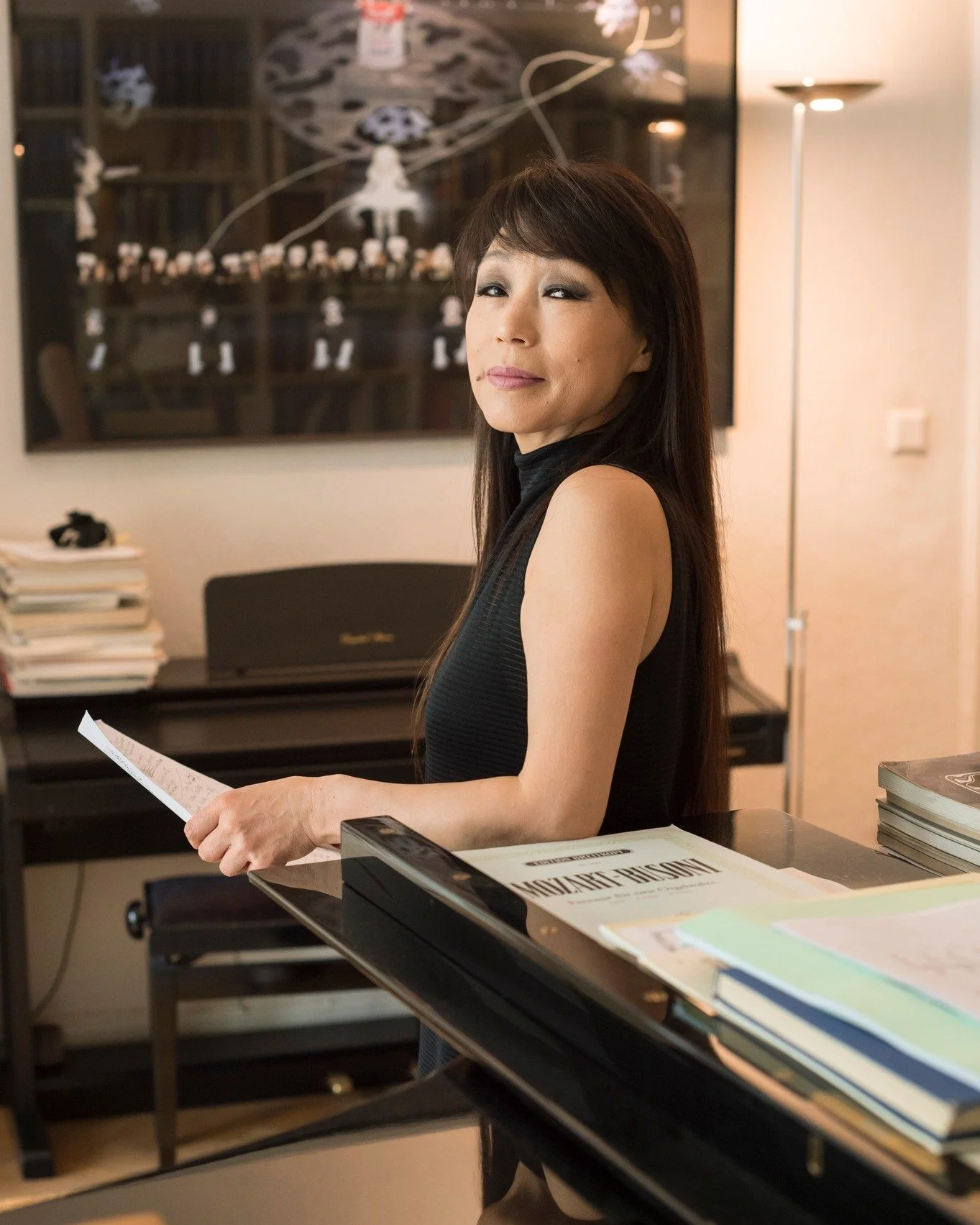
Photo by Julie Glassberg for The New York Times
Unsuk Chin, South Korean COMPOSER
Born: July 14, 1961
Raised: Seoul, South Korea
Unsuk Chin is a highly acclaimed South Korean composer of contemporary classical music, widely recognized for her imaginative synthesis of global modernism with elements rooted in the Korean musical tradition. Her music is marked by vivid color, rhythmic vitality, and an acute sensitivity to sound itself. Chin’s contributions to the international classical music scene have been recognized with numerous prestigious honors, including the Ernst von Siemens Music Prize (2024) and the Léonie Sonning Music Prize (2021), placing her among the most influential living composers today.
Early Life & Education
Despite being largely self-taught at the piano in her early years, Chin quickly progressed as a musician. She studied composition at Seoul National University under the tutelage of Kang Sukhi, a South Korean composer renowned for introducing electronic music to South Korea. Inspired by this environment, Chin began exploring contemporary aspects of classical music within the South Korean musical aesthetic, experimenting with timbre, texture, and flexible approaches to pitch and rhythm. The academic rigour of her education under Kang Sukhi gave her a strong structural framework; however, it never replaced her instinctive relationship with sound.
Her fascination with composition extended beyond an emphasis on melody to the intricacies of sound itself — how texture, colour, and rhythm interact to form entire musical landscapes. Chin received early international recognition for her graduation piece Spektra, winning the Gaudeamus Award in 1985 and announcing herself on the global contemporary music stage. Following this success, she moved to Germany to study at the Hochschule für Musik und Theater in Hamburg with György Ligeti, a leading voice in experimental and innovative classical music. Ligeti encouraged Chin to avoid rigid systems and stylistic dogma, urging her instead to discover her own compositional voice.
During this period, she absorbed the complexities of postwar European modernism while maintaining distance from its constraints, allowing her style to develop with greater confidence and autonomy. Her education gave her access to global musical languages, but her early self-taught foundations ensured that her work would remain imaginative, flexible, and unmistakably her own.
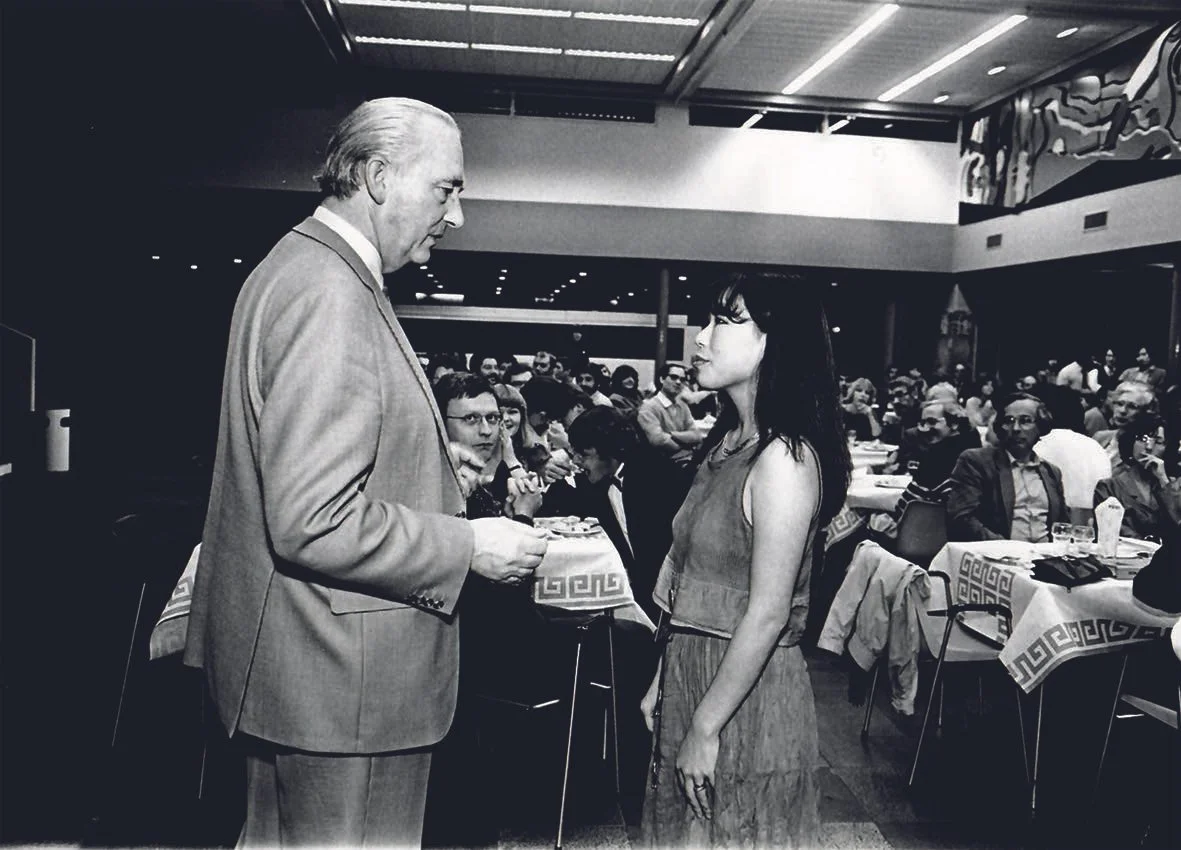
Unsuk Chin receives the Gaudeamus Award from Gaudeamus-director Chris Walraven
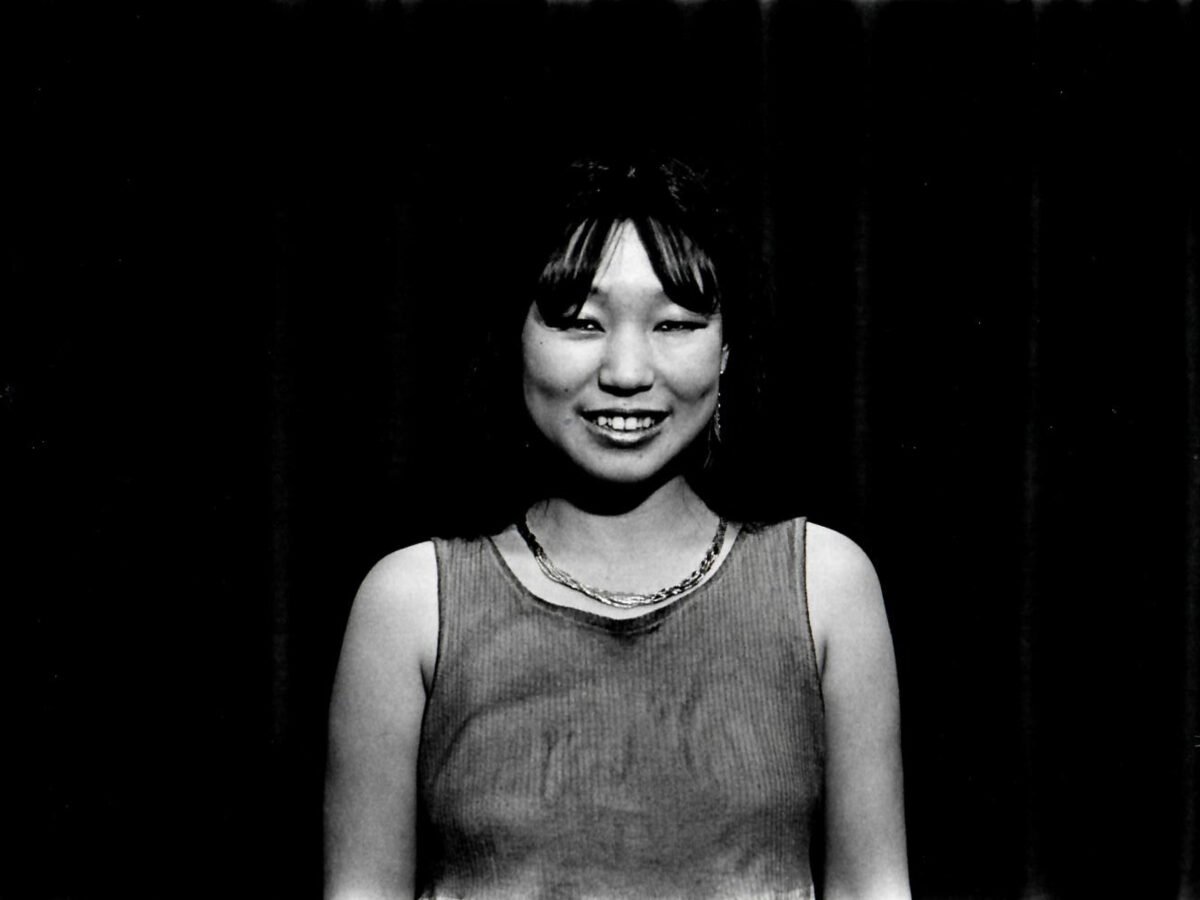
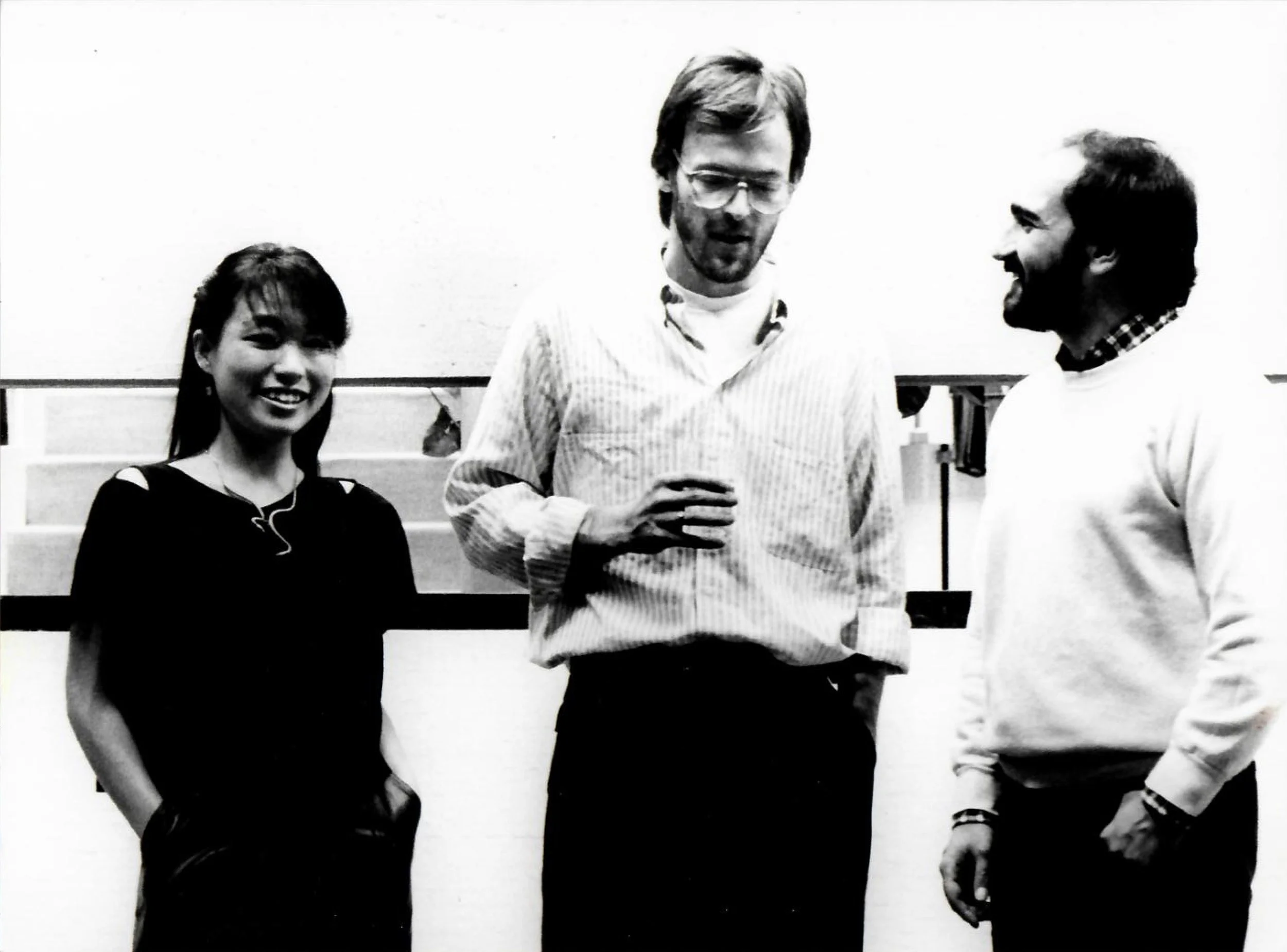
Three Gaudeamus Award-winners: Unsuk Chin (1985), Uros Rojko (1986) en Mauro Cardi (1984)
Musical Style & Innovation
Chin’s impressive command of musical texture results in a signature style of colourful, living, and meticulously constructed music. Her works often prioritise sound itself: timbre, texture, and motion move to the foreground, frequently taking precedence over traditional notions of melody and harmonic progression. She draws clear influence from Ligeti’s textural complexity, while also incorporating the precision and clarity associated with electronic music and the rhythmic vitality of Balinese gamelan. These influences dissolve into a sound world that feels abstract and dreamlike, yet strikingly tactile, creating a sense of wonder and subtle humour beneath the surface — as if the music is inviting curiosity rather than demanding explanation.
Chin’s 2007 opera Alice in Wonderland exemplifies this balance between imagination and discipline, allowing moments of musical freedom to coexist with exacting technical control. Her music demonstrates that sound can generate its own internal logic, remaining intentional and immersive without relying on conventional melodic hierarchies.

© Klaus Rudolph
Major Works

Violin Concerto No. 1 (2001)
Composed for the Deutsches Symphonie-Orchester Berlin in 2001, while Chin was based in Germany, Violin Concerto No. 1 demonstrates her precise command of texture, creating a shimmering, densely layered sound world in which the solo violin interacts dynamically with the orchestra. In 2004, the work earned Chin the Grawemeyer Award for Music Composition, underscoring its significance within the contemporary repertoire. Structured in four movements, each with a distinct character, the concerto showcases the breadth of Chin’s expressive and technical range.
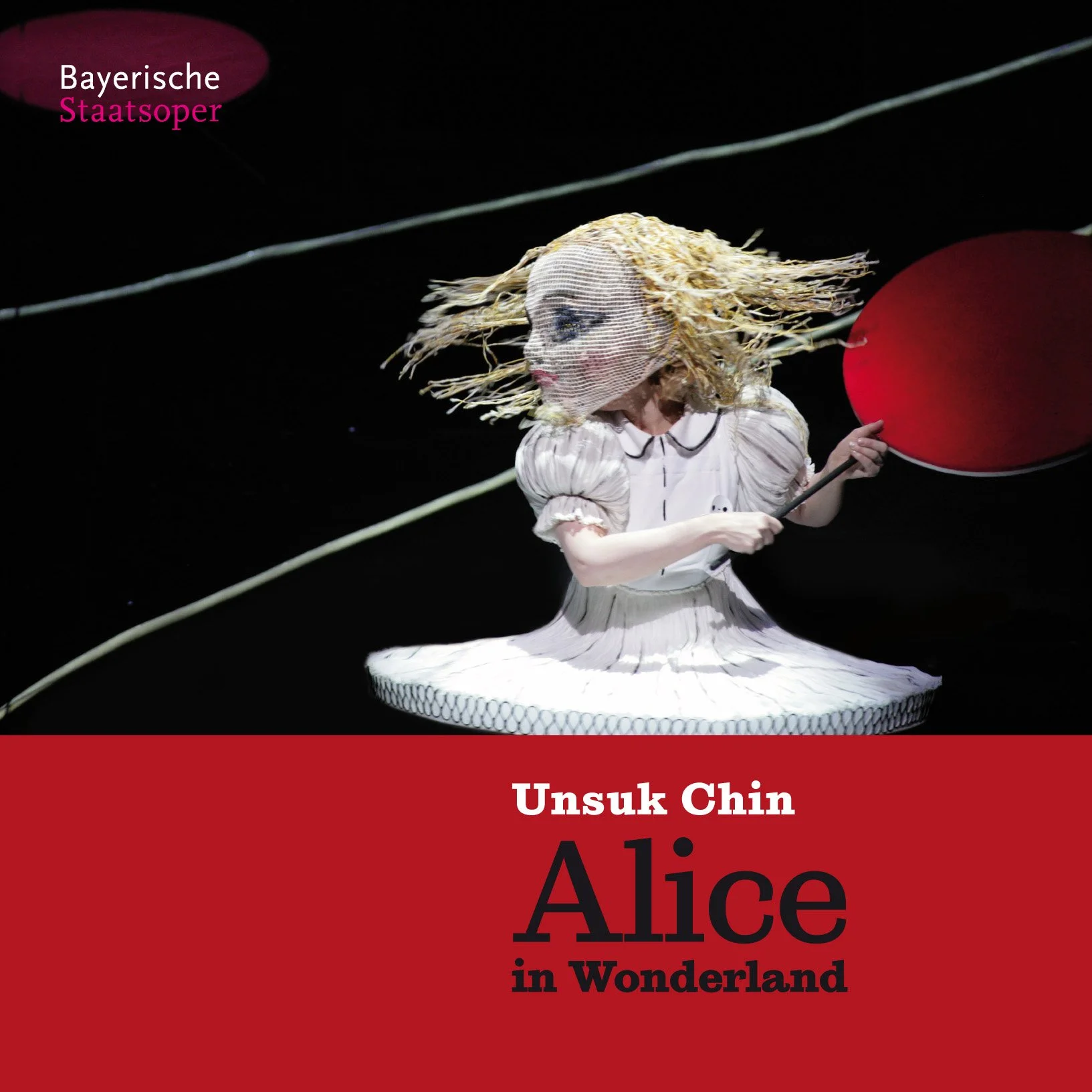
Alice in Wonderland (2007)
Alice in Wonderland was Unsuk Chin’s first opera and remains one of her largest-scale works. Premiered in 2007, the opera draws on Lewis Carroll’s Alice’s Adventures in Wonderland and Through the Looking-Glass. The narrative aligns naturally with Chin’s musical language, allowing her to explore playfulness, surrealism, and sonic fantasy while also engaging with the darker, more enigmatic aspects of Carroll’s world.
Influence, Legacy, & Cultural Impact
Chin has had a significant impact on South Korean classical music, while also maintaining a firmly international presence. She continues to influence younger generations of composers through her uncompromising approach to sound and form. Her works are frequently performed by major orchestras and ensembles worldwide, reflecting her standing within contemporary classical music. Awards such as the Grawemeyer Award and the Ernst von Siemens Music Prize are not merely career milestones; they signal how central her voice has become within the global musical landscape.
As a Korean woman composing at the highest international level, Chin serves as a powerful model for composers navigating questions of identity, tradition, and innovation. Her career affirms that it is possible to write imaginative, rigorously crafted music without conforming to a single aesthetic school or cultural expectation.

© Rui Camilo
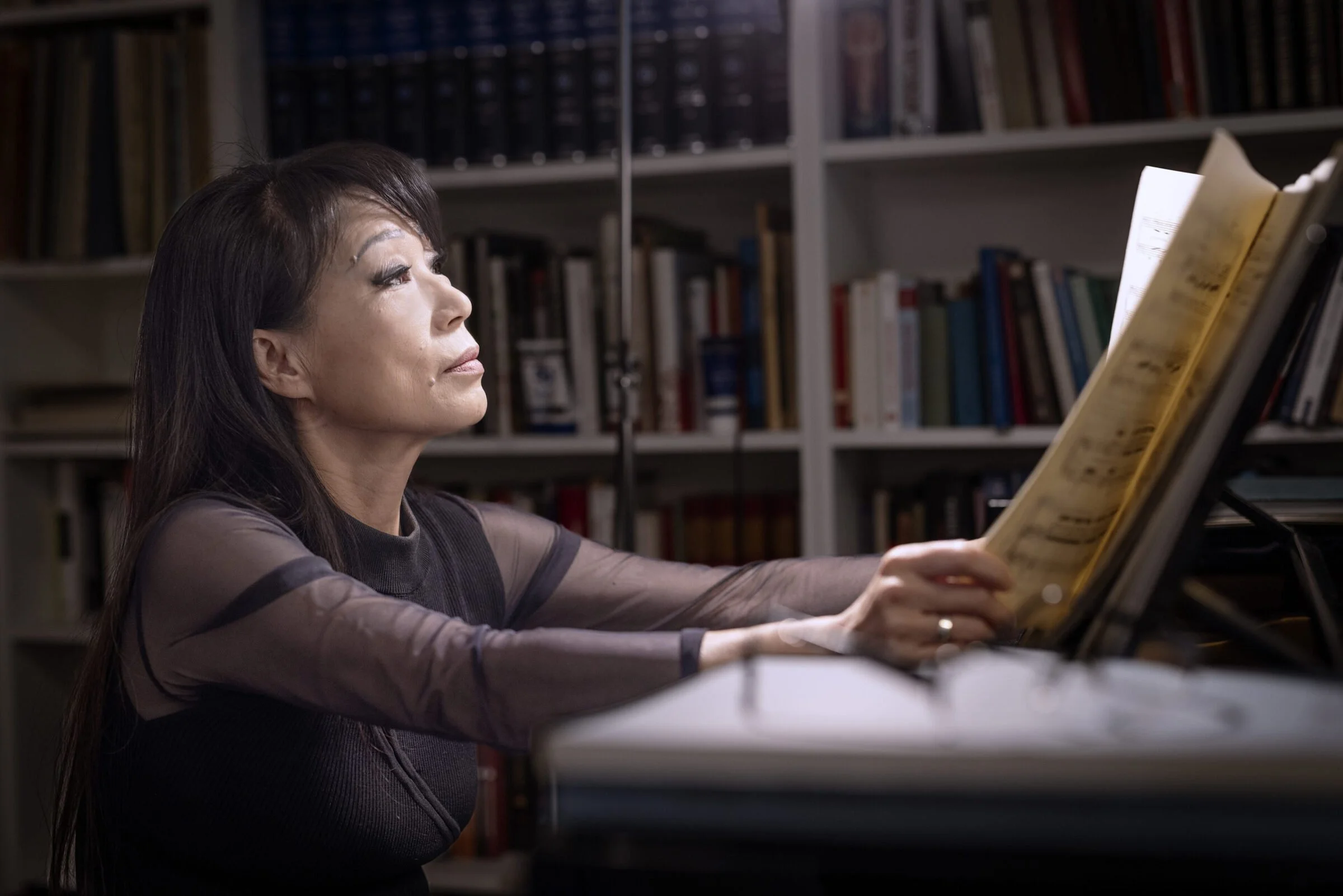
© Rui Camilo
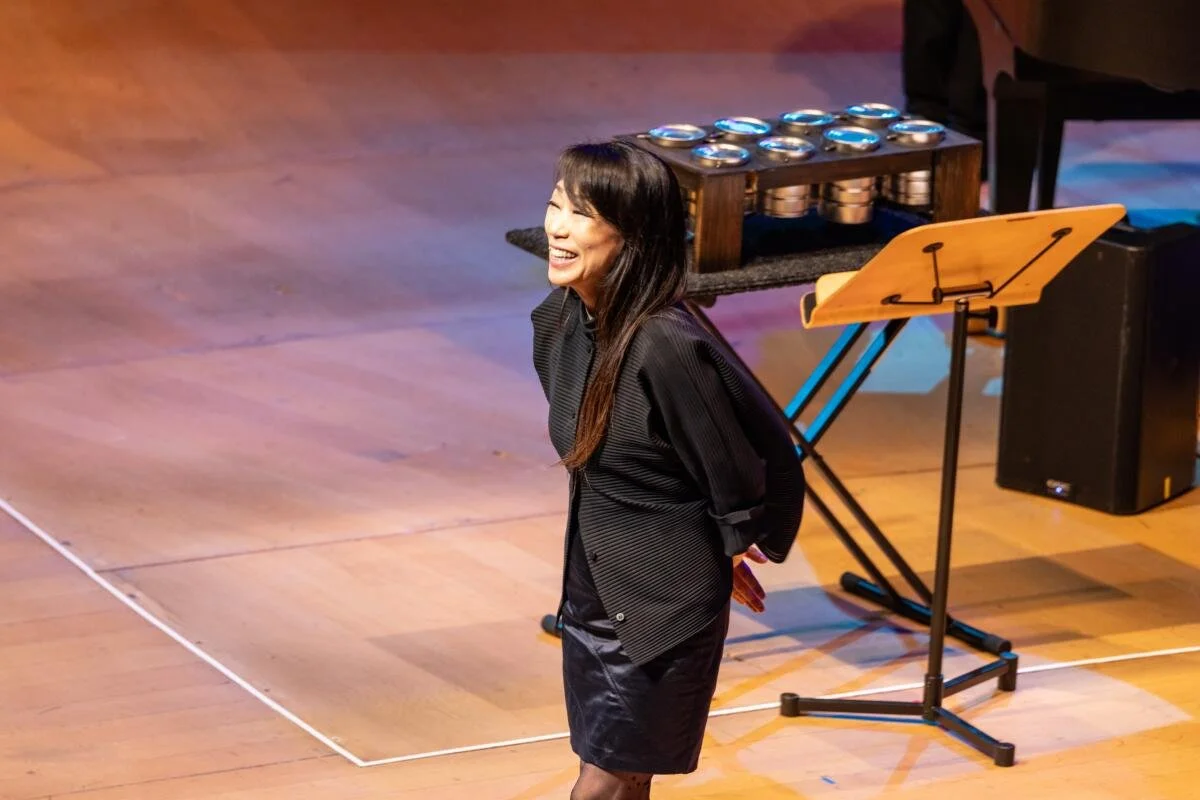
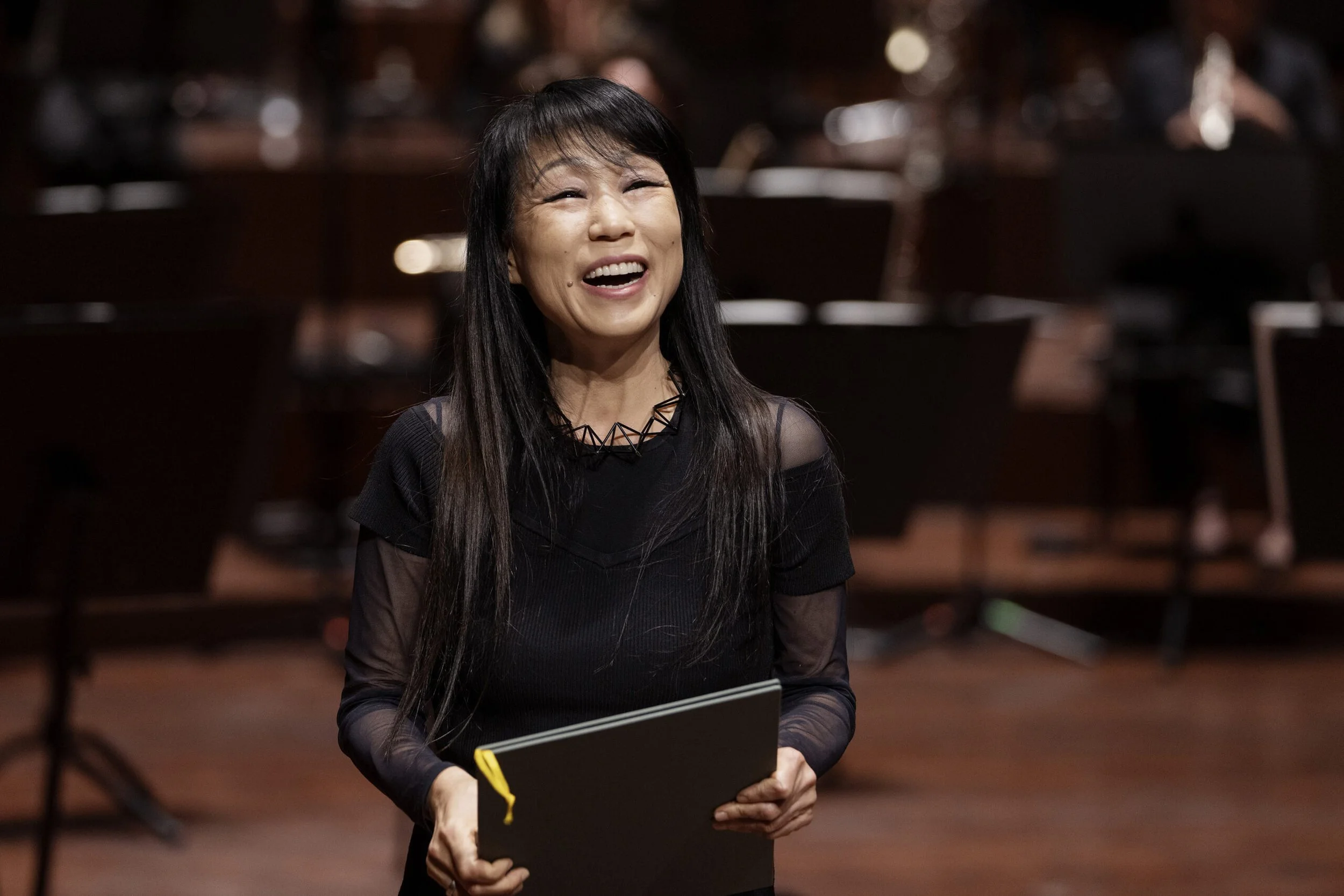
Unsuk Chin onstage at the L.A. Phil’s “Seoul Festival,” featuring a new generation of Korean composers.
(Jason Armond / Los Angeles Times)

Unsuk Chin and Bergen International Festival Artistic Director Anders Beyer
Photo by Thor Brødreskift
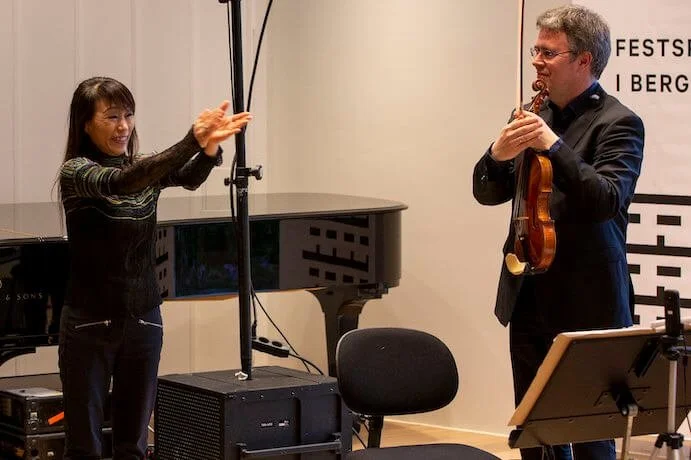
Unsuk Chin and Oslo String Quartet
Photo by Paul Johannessen
Conclusion
In a sense, Unsuk Chin’s music feels like a refusal — of limits, of categories, of easy explanations. Her work does not tell listeners what to think; instead, it invites close attention, sustained curiosity, and openness to sound as a space of endless possibility.

Julie Glassberg for The New York Times
Videos
Links
Biography: Unsuk Chin | Bayerische Staatsoper
Unsuk Chin: interview about Cello and Sheng Concertos | Boosey & Hawkes
Unsuk Chin: grinning teeth and false magic in Gougalōn by Thea Derks
Biography: Unsuk Chin | Ernst von Siemens Musikstiftung
Composer: Chin, Unsuk | Bachtrack
Bachtrack Composers Project: Unsuk Chin Interview
There’s more to Korean music than K-Pop. Young composers show how in L.A. Phil’s Seoul Festival by Mark Swed
The Music of Unsuk Chin: Lucid Sonic Objects | Ensemble Musikfabrik
Gaudeamus: Unsuk Chin Biography
10 Questions for Composer Unsuk Chin | the Arts Desk
Unsuk Chin awarded the Léonie Sonning Music Prize 2021 | Léonie Sonning Musikpris
Bergen International Festival Hosts Unsuk Chin as Composer-in-Residence | I Care If You Listen
Unsuk Chin: Graphic Dreams | Elbphilharmonie
Composing Outside the Lines | The New York Times
Unsuk Chin: Dissonance in Composition | feminir